Do you want to earn extra money while keeping your day job? Have you thought about turning a hobby into profit or using your skills to build something new? If you answered yes, you’re not alone. Millions of people are starting side businesses, and this trend keeps growing.
Starting a side business is one of the easiest ways to achieve financial freedom and personal growth. Whether you want to pay off debt, save money, or explore your potential, a well-planned side business can change your financial future. You can still keep your main job while you build your business.
The best part about a side business is flexibility. You can start slowly, test your ideas, and grow when you’re ready. With digital platforms and online tools, it’s now easier than ever to launch a business alongside your regular work.
In this guide, you’ll learn how to start a side business from scratch. We’ll cover finding your idea, checking if people want it, launching your first product or service, and growing your business. You’ll also learn about legal steps, taxes, time management, and the best tools to use.
By the end of this article, you’ll have a clear plan to turn your idea into a successful business. Let’s get started.
What is a Side Business?
A side business, also called a side hustle, is any work you do to earn extra money beyond your main job. Unlike a full business that needs all your time and money, a side business lets you earn more income while keeping your current job.
Side businesses include many types of work. You might do freelance writing, consulting, sell products online, tutor students, or make handmade items. All of these share one goal: earning extra money through your own effort.
Today, side businesses are more than just extra income. Many people use them to test ideas before starting a full-time business. This way, they can see if their idea works without taking big risks.
History and Evolution of Side Businesses
Side businesses aren’t new. For years, people have done extra work to earn more money. But the way people do side businesses has changed a lot.
In the early 1900s, side businesses were usually selling homemade goods or offering local services. Then the internet came along in the 1990s. Suddenly, people could sell to anyone, anywhere. EBay started in 1995, and it let anyone become a seller.
In 2008, the economy got rough. Many people needed extra money, so they started side businesses. More freelancing websites appeared. Smartphones made it even easier to run a business from anywhere.
Now in 2026, we’re seeing new trends. There are more digital products, AI tools, and special niches. The COVID-19 pandemic made remote work common. By now, over 40% of workers do some kind of freelance or gig work. This creates huge opportunities for people who want to start side businesses.
Why Starting a Side Business Matters
Side businesses matter for many reasons. They help the economy, create new ideas, and give workers more options.
On a personal level, side businesses offer big benefits. They give you extra money and protect you from economic problems. They help you learn new skills. They let you be creative in ways your regular job might not allow.
Many successful business owners started with side businesses. They tested ideas and built customers before going full-time.
The economic impact is huge. Side businesses add billions to the economy every year. They create new products and services that solve problems. They try new things that might change entire industries.
Numbers show impressive results. Side business owners can earn $500 to $5,000 extra each month. About 67% of side business owners want to eventually turn their side business into their main job.
How Does a Side Business Work?
Understanding how side businesses work helps you run one successfully.
A side business works like any business. You find what customers need, create something to meet that need, and get paid for it. The difference is you do this part-time while keeping your main job.
There are different ways to make money. If you offer services, you invoice clients for work done. If you sell products, you take orders through a website or store. Digital products like courses or downloads can earn money while you sleep.
Successful side business owners work systematically. They set clear time limits for work and personal life. They create efficient systems. They listen to customers and improve their offerings. The key to success is doing things consistently, not just when they feel like it.
Key Benefits of Starting a Side Business
Starting a side business brings many advantages:
Money Benefits:
- Extra income so you don’t rely on one source
- Potential for big growth as your business expands
- Tax deductions for business expenses
Career Benefits:
- Learn skills in business, marketing, and money management
- Meet new people and build professional connections
- Build a portfolio that can help your career
Personal Benefits:
- Get better at managing time and staying organized
- Feel more confident as you achieve goals
- Express yourself creatively
Flexibility:
- Choose your own schedule
- Test ideas without big commitment
- Change direction or stop easily if needed
Challenges and Common Misconceptions
Starting a side business has challenges. Let’s examine common problems and solutions.
Time Problems: Balancing a side business with your job and life is hard. Many people don’t realize how much time it takes. This can lead to exhaustion or neglect of important areas.
Wrong Beliefs: One big myth is that side businesses are easy money. That’s not true. They take real work and time, just like any job.
Another myth is that you’ll make money fast. Most side businesses need several months before they earn real money. You need patience and savings to get through this time.
How to Fix These Problems: Start with realistic time expectations. Maybe begin with just 5-10 hours per week. Build habits that you can keep up. Don’t spend all your profit on the business. Keep some money for yourself so you’re financially safe.
Side Business Trends in 2026
Side businesses are always changing. Here are the biggest trends right now:
Digital Products Growing: More people are selling digital products like courses, templates, and printables. Once you create them, they can keep making money without much extra work.
Using AI: Artificial intelligence helps side business owners do more. AI can handle customer service, create content, and do admin tasks that took hours before.
Focusing on Niches: Instead of competing with everyone, successful side businesses focus on specific niches. They become experts in one area and can charge more.
Experts say this will keep growing. More people will sell digital products, subscriptions, and build communities. The tools keep getting better, so it’s easier for anyone to start a business.
How to Start a Side Business: Step-by-Step Guide
Here’s how to launch your side business:
Step 1: Find Your Idea Think about what you’re good at, what you enjoy, and what you have. What problems can you solve for people? Check if people actually want what you’re offering.
Step 2: Test Your Idea Before spending lots of time, try it out first. Offer a small sample, take pre-orders, or work with a few customers to see if they like it.
Step 3: Choose Your Business Type Decide if you want to be a sole proprietor or form an LLC. Ask a tax expert what’s best for your situation.
Step 4: Set Up Basics Open a business bank account, get needed licenses, and set up a simple accounting system. Create a basic logo and professional email templates.
Step 5: Define What You Sell Write down your products or services, how much you’ll charge, and how you’ll deliver them. Document your process so you do it the same way every time.
Step 6: Get Online Build a simple website, create social media profiles, and sign up on relevant platforms. Make sure people can find you online.
Step 7: Get Your First Customers Tell friends and family, offer a special first price, and ask for referrals. Do great work so people leave good reviews and come back.
Step 8: Grow and Improve Write down what works well, use tools to automate tasks, and keep improving based on what customers say and what the numbers show.
Best Tools and Resources for Side Business Success
These tools help run your side business:
Canva – Make graphics for your brand and marketing even if you can’t design.
QuickBooks – Send invoices, track expenses, and manage money.
Mailchimp – Send email campaigns and stay in touch with customers.
Shopify – Set up an online store quickly and easily.
Todoist – Keep track of tasks for work and business.
Google Workspace – Professional email and collaboration tools.
Freedom – Block distracting websites when you need to focus.
Case Studies and Success Stories
Sarah’s Consulting Business: Sarah worked in marketing. She started consulting on the side while keeping her job. In 18 months, she had clients paying her $3,000 each month. Eventually, she quit her job to run her business full-time.
Marcus’s Product Store: Marcus sold custom phone cases on Etsy as a hobby. He kept improving his products and adding new ones. Now his store makes $8,000 every month.
Elena’s Digital Products: Elena was an accountant. She created bookkeeping templates for small business owners. Her digital products make money while she still works her regular job.
Expert Tips and Best Practices
Experts share what works:
“Start now, even if you’re not ready. Waiting for perfection kills more side businesses than lack of skill ever does.” — Startup Advisor
“Protect your time. Treat your side business hours like real appointments that you can’t cancel.” — Productivity Consultant
“Do one thing at a time. Trying to do too much at once means nothing gets done well.” — Business Coach
Frequently Asked Questions
How much money do I need to start a side business?
Many side businesses start with under $500. Service businesses often need very little. Product businesses might need more.
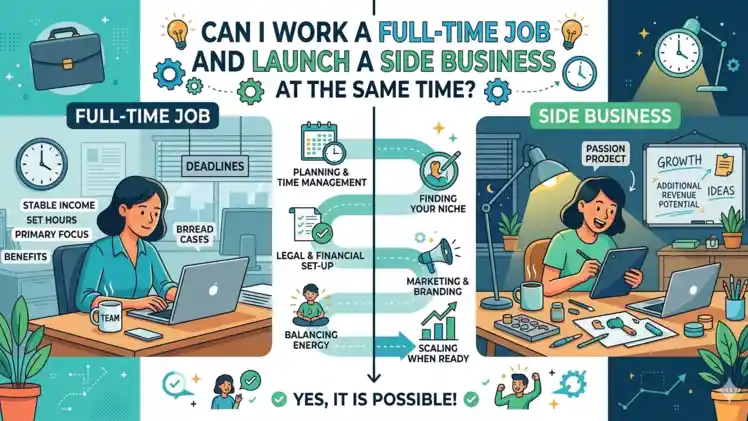
Can I work a full-time job and launch a side business at the same time?
Yes, but check your work contract. Many employers allow side work as long as it doesn’t affect your job.
How long does it take to make money from a side business?
It depends on the business and how much work you put in. Most side businesses start making money within 3-6 months.
Do I need to register my side business?
Rules differ by place and business type. Sole proprietors often don’t need much registration. Other types might need specific papers.
Conclusion
Starting a side business is one of the easiest ways to earn more money, learn new skills, and become your own boss. It takes work and patience, but the rewards are worth it.
In this guide, we covered everything you need: finding an idea, testing it, setting up your business, and growing it. The tools and tips here help you at every step.
Remember, the best way to start is to just begin. You don’t need everything perfect. You just need to take that first step and keep going.
Take action today. Decide what your first step will be, commit to working on it regularly, and watch your business grow.
💬 Leave a Comment
Leave a Comment