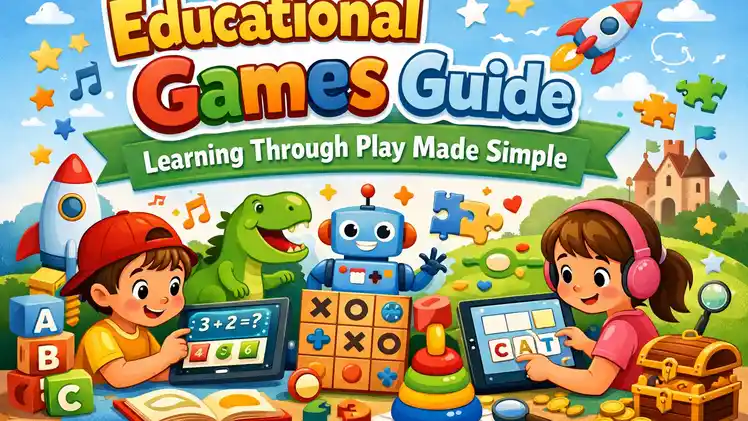
Want to make learning fun? Educational games can help. These games mix play with learning. They help kids and adults gain new skills while enjoying themselves.
Today, educational games are key tools for teachers, parents, and learners. They turn boring lessons into fun activities. Students remember more from games than from regular teaching.
This guide explains what educational games are. You’ll learn about their history, why they matter, and how to use them well. Keep reading to discover the world of educational gaming.
What Are Educational Games?
Educational games are games that teach skills or knowledge. You can play them on computers, tablets, phones, or as board games.
The aim of these games is to make learning fun. They use points, rewards, and challenges to keep players interested. These games teach math, science, reading, and problem-solving.
Learners of all ages can use them. The main difference from regular games is the learning goal.
History and Evolution of Educational Games
Educational games have changed a lot over time.
In the early 1900s, teachers used simple board games. These games taught math and reading.
In the 1970s and 1980s, computers brought new learning games. Companies made early learning software. Kids could learn typing, math, and reading on computers.
The 1990s had video games for learning. Games like Reader Rabbit became popular. The internet let people play educational games online.
In the 2000s, mobile apps exploded. Smartphones made learning games available to everyone. Now there are thousands of educational apps.
Today, games use smart technology like artificial intelligence and virtual reality. These new tools make learning more real and fun.
Why Are Educational Games Important?
Educational games matter now more than ever. Here’s why they have become key learning tools.
First, games make learners more engaged. Students who struggle with regular lessons often do better with games. More engagement means better learning.
Second, games give quick feedback. Players know right away if they got it right. This fast response helps learners understand faster.
Third, games let you practice without getting bored. Learning needs practice, but drills feel boring. Games make practice feel like play.
Research shows good results. Teachers say games make students more motivated. Studies show game-based learning can improve test scores by 20-50%.
Games help different types of learners. Visual learners, active learners, and those with attention issues all benefit. Games work for many learning styles.
How Do Educational Games Work?
Knowing how these games work helps you pick good ones.
Most educational games use motivation tricks. They have clear goals, fast feedback, and increasing difficulty. These things keep players learning.
Learning happens by doing. Players solve problems and make choices. This active doing helps memory and understanding.
Good games balance three things: learning content, game fun, and player interest. When all three work, the game teaches well.
For example, math games give problems for points. Reading games use stories where understanding helps progress. Science games let players try experiments virtually.
Key Benefits of Educational Games
Educational games have many good points:
- Better memory: Games help players remember more than regular study. Doing things creates stronger memories.
- More motivation: Games make learning fun. This good feeling makes people want to keep learning.
- Skill building: Games teach more than school subjects. They improve thinking, problem-solving, and decisions.
- Personal learning: Many games change to match skill level. Players learn at their own speed.
- Less stress: Games have low pressure. Failing feels normal rather than bad.
- Social skills: Multiplayer games teach working with others.
- Easy access: Digital games help people in remote places learn.
Challenges and Common Misconceptions
Educational games have some issues and wrong ideas.
One myth is games are only for fun. While games are fun, they can teach real skills. The game is just a way to teach.
Another wrong idea is games replace teachers. Games work best with teaching. Teachers give context that games cannot.
Quality is a problem. Not all games called “educational” really teach. Some have ads or bad design. Parents must check games carefully.
Too much screen time can be bad. Balance game time with physical play, reading, and talking to people.
Schools face issues too. Teachers may not know how to use games well. Tech problems can get in the way.
Educational Games in 2026: Latest Trends and Innovations
Educational games keep changing. Here are new trends.
Smart technology is making games more personal. Computer programs change game difficulty based on how well you play. This makes learning just right for each person.
Virtual and augmented reality are creating new worlds. Students can visit ancient places, do science experiments, or look inside the body. These experiences make learning real.
Mobile games keep growing. Phone apps now do more than simple drills. Developers make full learning experiences for phones.
Multiplayer features let learners work together from anywhere. Games teach teamwork while teaching school subjects.
Experts say game learning will keep growing. More schools will use games in teaching. Better technology will make games work better.
How to Implement Educational Games (Step-by-Step Guide)
Want to start using educational games? Follow these steps:
- Set goals: Decide what skills or knowledge you want. Clear goals help pick good games.
- Find games: Look for games that match your goals. Read reviews and try free versions.
- Test first: Play the games yourself first. This helps you know what to expect.
- Plan use: Decide when and how you’ll use games. Games work best with other learning.
- Prepare tech: Make sure devices work and internet connects.
- Explain clearly: Tell learners what they’ll learn and why. This helps them learn more.
- Watch progress: Track how learners do and what they learn.
- Talk about it: After playing, talk about what was learned. This connects game learning to real learning.
- Ask for input: Ask learners what they liked and learned.
- Change as needed: Based on results, make your approach better.
Best Tools and Resources for Educational Games
Here are good resources for finding quality games:
Websites:
- Kahoot! – Fun quizzes for class
- Khan Academy Kids – Free games for little kids
- PBS LearningMedia – Videos and games by grade level
Subject Games:
- Prodigy Math – Math games for young students
- Tynker – Coding games for kids
- Duolingo – Language learning through play
Helpful Resources:
- Common Sense Media – Reviews of educational apps
- Edutopia – Articles on game learning
- ISTE Game-Based Learning resources
Books:
- “The Game-Based Learning Handbook” by Michael J. Farley
- “Actionable Gamification” by Yu-kai Chou
Case Studies and Success Stories
Real examples show how games help learning.
In a California school, teachers used math games thirty minutes daily. After one term, math scores went up 34%. Kids said they felt better about math.
A language app tracked users for six months. Users who played gamified lessons fifteen minutes daily learned 40% faster than those using regular methods.
A rural school with few resources used free games on tablets. Students who had trouble with science improved a lot after three months.
These examples show games work in different places. The secret is picking good games and using them right.
Expert Tips and Best Practices
Experts suggest these ideas for good results:
“Pick games that match learning goals. The best game teaches what you need to teach.” – Dr. Sarah Chen, Education Tech Researcher
“Balance is important. Use games with other activities like hands-on projects and direct teaching.” – Mark Thompson, Curriculum Director
“Let students help pick games. When kids have choice, they get more interested.” – Lisa Park, Teacher
“Focus on learning, not just the game. Always connect game experiences to bigger class goals.” – Dr. James Wilson, Learning Scientist
Remember games are tools, not answers. Good use means combining games with good teaching and clear goals.
Frequently Asked Questions
Do educational games work for all ages?
Yes, games work for kids, teens, and adults. Pick games that match age and skill.
How long should people play?
Time depends on age and goal. For little kids, fifteen to thirty minutes daily is enough. Older learners might play longer as part of learning.
Are games bad because of screen time?
When used right with time limits and other activities, games are fine. Watch and set limits.
Are free games as good as paid ones?
Some free games are great. Some paid games are bad. Look for quality, not price.
How do I know a game is truly educational?
Look for clear learning goals. Check for proof it works. Make sure content fits the age. Teacher reviews help.
Conclusion
Educational games are powerful tools for making learning fun and effective. They mix play with learning to help all ages gain skills and knowledge.
This guide taught you what educational games are. You learned about their history and why they matter. Now you know how they work and their good points. You have steps to start and resources to use.
The secret to success is smart use. Pick games that match learning goals. Balance with other activities. Talk about what learners gain. Done right, games make learning an adventure.
Start looking at educational games today. See how they can improve learning for you, your kids, or your students. Educational gaming offers endless ways to make learning exciting.
💬 Leave a Comment
Leave a Comment