The Complete Guide to Connected Car Technology (2026)
Imagine your car knows the traffic lights are about to change. It feels like magic,…
1 article
 Automotive
Imagine your car knows the traffic lights are about to change. It feels like magic,…
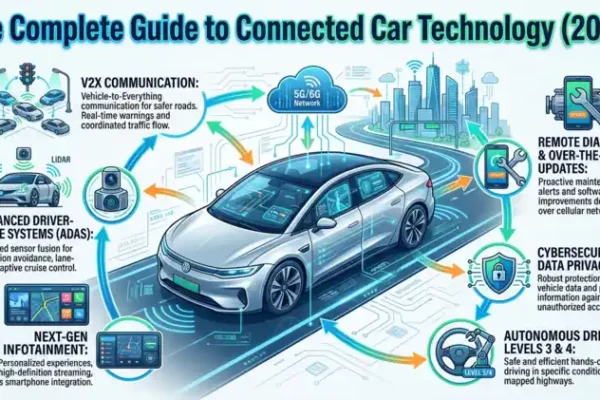
Cars are becoming smarter than ever before. Connected car technology is changing how we drive, maintain vehicles, and stay safe on the road. This technology allows vehicles to communicate with each other, road infrastructure, and the internet. In this guide, you will learn what connected car technology is, how it works, and why it matters. We will cover its history, benefits, challenges, and future trends. Whether you are a car buyer, tech enthusiast, or industry professional, this article will help you understand the connected car revolution.
Connected car technology refers to vehicles with internet access and the ability to communicate with external systems. These cars use sensors, software, and cellular connections to share data. The data can include location, speed, traffic conditions, and vehicle health information. Connected cars can communicate with other vehicles, road signs, and cloud servers. This technology turns a regular car into a smart device on wheels.
Connected car technology began in the 1990s with basic telematics. Early systems allowed emergency calls when accidents occurred. By the 2000s, GPS navigation became common. The 2010s saw the rise of smartphone integration and real-time traffic updates. In recent years, 4G and now 5G networks have enabled faster data transfer. Companies like Tesla, Google, and traditional automakers have pushed innovation. Today, connected cars can drive themselves partially and update software over the air.
Connected car technology improves safety, efficiency, and convenience. According to industry studies, connected vehicles can reduce accidents by up to 20 percent. They help drivers avoid traffic jams and find parking spots faster. Fleet managers use this technology to optimize routes and reduce fuel costs. Connected cars also enable predictive maintenance, which prevents breakdowns before they happen. As cities grow smarter, connected vehicles will play a key role in reducing congestion and pollution.
Connected cars use multiple systems to communicate and operate. They have onboard diagnostic systems that monitor vehicle health. Cellular modems enable internet access and data transfer. GPS modules provide location tracking. Sensors collect data about surroundings, including other vehicles and road conditions. This information processes through the car’s computer system. Data then sends to cloud servers for analysis. The car receives updates and recommendations based on this data. For example, if traffic is heavy ahead, the car can suggest an alternate route.
Connected car technology offers many advantages:
Some people worry about privacy and data security. Connected cars collect personal information, which raises concerns. Others think the technology is only for luxury vehicles. In reality, many affordable cars now offer basic connectivity. Some believe connected cars can drive themselves completely. While self-driving technology is advancing, most vehicles still require human input. Data reliability and network coverage can also be issues in some areas. Addressing these challenges requires better security measures and improved infrastructure.
The connected car industry is evolving rapidly in 2025. Artificial intelligence is making cars smarter at recognizing objects and predicting behavior. 5G networks are enabling faster, more reliable connections. Over-the-air updates are becoming standard, allowing cars to improve without dealership visits. Electric vehicles are integrating more connected features. V2X technology, which allows cars to communicate with infrastructure, is expanding. Experts predict that by 2030, most new cars will be fully connected. Autonomous driving features are also becoming more common in everyday vehicles.
Many companies have succeeded with connected car technology. A major ride-sharing company reduced wait times by 30 percent using connected fleet data. An insurance provider offered 15 percent discounts to drivers who shared safe driving data. A logistics company cut fuel costs by 20 percent through route optimization. Individual car owners have reported fewer breakdowns thanks to predictive maintenance alerts. These examples show how connected technology benefits both businesses and consumers.
Automotive experts recommend several best practices for connected car owners. Always keep your software updated to benefit from the latest features and security. Review privacy settings and limit data sharing when possible. Use connected features for maintenance alerts to avoid costly repairs. Take advantage of safety features like blind-spot monitoring and automatic emergency braking. Explore insurance discounts available through connected driving programs. Stay informed about new features as technology continues to evolve.
A connected car is a vehicle with internet access and the ability to communicate with other devices and systems.
Most new cars offer some connectivity, but the level varies by brand and price.
Automakers implement security measures, but owners should also use strong passwords and update software regularly.
Any internet-connected device carries some risk, but manufacturers work continuously to improve security.
Some features work offline, but many require internet for full functionality.
Many automakers include basic connectivity for several years, with optional premium plans available.
Connected car technology is transforming the automotive industry. It makes driving safer, more efficient, and more enjoyable. From real-time traffic updates to predictive maintenance, connected features offer real benefits. While challenges like privacy and security exist, the advantages are significant. As technology advances, connected cars will become even smarter. Whether you are buying a new car or upgrading your current vehicle, consider the connected features available. Embrace this technology to enhance your driving experience and stay ahead in the modern world.
Subscribe for exclusive tech updatearticle insights, articles, and tips delivered to your inbox. No spam, ever.
🔒 We respect your privacy. Unsubscribe anytime.