How to Start a Side Business: Complete Guide
Do you want to earn extra money while keeping your day job? Have you thought…
1 article
 Business
Do you want to earn extra money while keeping your day job? Have you thought…
In today’s economic landscape, having a single income source is no longer the safest path forward. More people than ever are discovering the incredible benefits of starting a side business that complements their primary job. Whether you dream of escaping the 9-to-5 grind, earning extra income to pay off debt, or eventually turning your passion into a full-time career, learning how to start a side business is the first crucial step toward achieving your goals.
The beauty of a side business lies in its flexibility. You can start small, test your ideas without quitting your day job, and gradually build something meaningful over time. This approach minimizes risk while maximizing learning opportunities. Many successful businesses today began as humble side projects before growing into something extraordinary.
However, starting a side business requires more than just enthusiasm. It demands careful planning, time management, and a strategic approach to balancing your existing responsibilities with your new venture. Without proper guidance, many aspiring entrepreneurs fall into common pitfalls that could have been easily avoided.
In this comprehensive guide, we will walk you through everything you need to know about launching your side business successfully. From evaluating your ideas and validating market demand to setting up operations and marketing your offerings, we cover each essential step in detail. By the end of this article, you will have a clear roadmap for turning your entrepreneurial dreams into reality while maintaining stability in your current life.
The foundation of any successful side business begins with understanding what you offer. Take time to inventory your skills, experiences, and areas of expertise. What are you naturally good at? What activities bring you joy? What topics could you discuss for hours without getting bored? Answers to these questions often reveal promising business opportunities.
Consider your professional background and the knowledge you have accumulated throughout your career. This expertise, particularly in areas where others seek guidance, can become the basis for valuable services or products. For instance, if you work in accounting, offering bookkeeping services to small businesses on weekends could be an ideal side business. If you have a talent for photography, event photography or stock photo sales might align perfectly with your schedule.
Passion projects often make the best side businesses because motivation remains high even when challenges arise. When you genuinely enjoy what you do, the extra hours feel less like work and more like investment in your future. However, passion alone isn’t sufficient. Ensure there exists actual demand for what you plan to offer.
Before investing significant time and money into your business idea, validating market demand is essential. Even the most brilliant concept will fail if no one wants to buy what you’re selling. Fortunately, several methods exist for testing demand without significant risk.
Start by researching competitors in your intended market. Who else offers similar products or services? What do they charge? How do they market themselves? Understanding the competitive landscape helps you identify gaps you can fill and differentiation strategies that might set you apart.
Talk to potential customers directly. Share your business concept with friends, family, and colleagues who might fit your target demographic. Ask honest questions about whether they would pay for your offering and what price they would consider reasonable. This feedback proves invaluable for refining your concept before launch.
Online tools like Google Trends, keyword research platforms, and social media listening can reveal interest levels in your product category. Look for patterns indicating growing demand or underserved niches. The goal is finding the intersection between what you love doing and what others are willing to pay for.
Every side business needs a basic plan, even if it remains informal. This document serves as your roadmap, guiding decisions and keeping you accountable. A good business plan doesn’t need to be lengthy or complex; it simply needs to answer key questions about your venture.
Define your business model clearly. How will you make money? Will you sell products, offer services, or combine both? What will you charge? Understanding your revenue model helps set realistic expectations and plan accordingly.
Identify your target customers as specifically as possible. Rather than saying “small business owners,” specify the type, size, and characteristics of businesses you intend to serve. This clarity improves marketing effectiveness and helps you tailor your offerings to customer needs.
Outline your startup costs and projected expenses. Even side businesses require some investment, whether for equipment, supplies, website development, or marketing. Knowing these figures helps you budget appropriately and determine how much capital you need to launch.
Set measurable goals with specific timelines. Instead of “make more money,” define “generate $500 in revenue within the first month.” Goals like these provide motivation and a way to track progress.
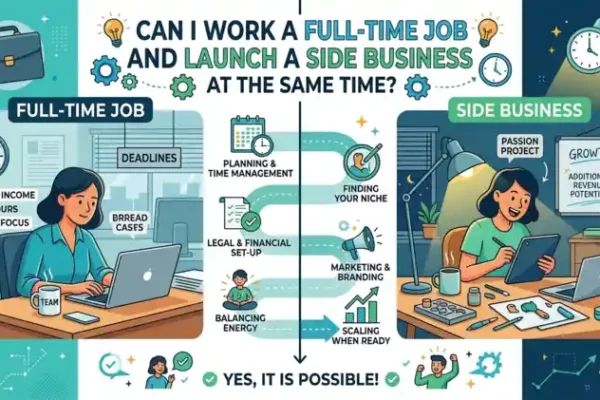
Time represents your most precious resource when running a side business alongside a full-time job. Without disciplined time management, burnout becomes likely, and both your day job and business suffer. Developing systems for maximizing productivity is essential.
Block dedicated time for your business activities. Treat these appointments as non-negotiable as meetings at your primary job. Early mornings, evenings, and weekends can all serve as productive business hours depending on your energy patterns and personal schedule.
Start with a minimum viable time commitment if you are uncertain about availability. Perhaps commit to five hours weekly, then scale up as you develop systems and see results. This approach prevents overcommitment while allowing flexibility to adjust as circumstances change.
Use tools and apps to stay organized and track time spent. Project management software, calendar apps, and time tracking tools help maintain accountability and identify productivity leaks. Batch similar tasks together to minimize context switching and maintain focus.
Depending on your business type and location, various legal requirements may apply. While full compliance details vary by jurisdiction, some general principles apply universally. Taking care of legal matters protects both you and your customers.
Determine your business structure. Many side businesses begin as sole proprietorships due to simplicity and low cost. However, forming a limited liability company (LLC) provides personal liability protection that becomes valuable as your business grows. Research the implications of each structure in your area.
Register your business name if using something other than your legal name. This process, often called “doing business as” or DBA registration, typically occurs through local government offices. Ensure the name you choose isn’t already in use by checking trademark databases.
Understand tax obligations for self-employment. When you earn income from self-employment, you become responsible for paying self-employment tax in addition to income tax. Setting aside money for these obligations throughout the year prevents unpleasant surprises come tax time. Consider consulting with an accountant to understand your specific situation.
Depending on your product or service, licenses or permits might be required. Research requirements specific to your industry and location. While this seems tedious, operating without proper credentials can result in fines or forced closure.
In the modern business environment, establishing an online presence is non-negotiable. Even businesses primarily serving local customers benefit from websites and social media visibility. This presence builds credibility and provides convenient access for potential customers.
Create a professional website showcasing what you offer. At minimum, include clear descriptions of your products or services, pricing information, contact methods, and testimonials from satisfied customers. Website builders like Wix, Squarespace, and WordPress make this accessible without technical expertise.
Establish social media presence on platforms where your target customers spend time. Focus on two or three platforms rather than spreading thin across every network. Share valuable content, engage with followers, and build community around your brand.
Consider local listings if serving nearby customers. Google Business Profile and similar directories help customers find you when searching locally. Claim and optimize these listings with accurate information and photos.
Launching successfully requires getting the word out to potential customers. Several strategies work well for new side businesses, especially those with limited marketing budgets. The key is consistency and meeting customers where they are.
Leverage your existing network. Friends, family, colleagues, and social connections often provide the first customers for side businesses. Share your venture openly with people in your circles. You might be surprised how many are interested in supporting your new endeavor.
Offer introductory promotions to attract new customers. Discounted services, package deals, or free consultations lower barriers to trying your offerings. These promotions generate reviews and testimonials that later help attract paying customers.
Join online communities related to your industry or target customers. Facebook groups, Reddit communities, and industry forums provide access to people actively seeking what you offer. Participate genuinely, providing value rather than just promoting your business.
Partner with complementary businesses for cross-promotion. If you offer web design services, partner with copywriters or SEO specialists who can refer clients to you when they need your expertise. These relationships benefit all parties and expand your reach.
Satisfied customers represent your most powerful marketing asset. When they share their positive experiences with others, credibility transfers that advertising cannot replicate. Cultivating referrals and reviews should be an ongoing priority.
Ask customers for referrals explicitly after completing successful projects. Most people are willing to help but need prompting. Make it easy by providing specific names to contact or shareable referral links.
Encourage satisfied customers to leave reviews on Google, Yelp, industry-specific platforms, or your website. These reviews significantly influence potential customers’ decisions. Respond to all reviews professionally, thanking positive reviewers and addressing concerns from negative ones.
Consider implementing a referral program that rewards customers for bringing new business. Small incentives like discounts on future services or gift cards motivate existing customers to actively promote your business.
Starting a side business represents an exciting journey toward greater financial freedom and personal fulfillment. While challenges certainly exist, the rewards of building something genuinely yours make the effort worthwhile. By carefully evaluating your ideas, planning strategically, setting up operations properly, and marketing effectively, you position yourself for success.
Remember that most successful entrepreneurs started exactly where you are now. They faced uncertainty, made mistakes, and learned valuable lessons along the way. Your side business doesn’t need to be perfect from day one; it simply needs to begin. Each step forward builds momentum and provides learnings that inform future decisions.
The time to start is now. Take the concepts from this guide and begin applying them to your specific situation. Identify your skills, validate your idea, create your plan, and take that first action. Your future self will thank you for having the courage to pursue something more.
Subscribe for exclusive tech updatearticle insights, articles, and tips delivered to your inbox. No spam, ever.
🔒 We respect your privacy. Unsubscribe anytime.