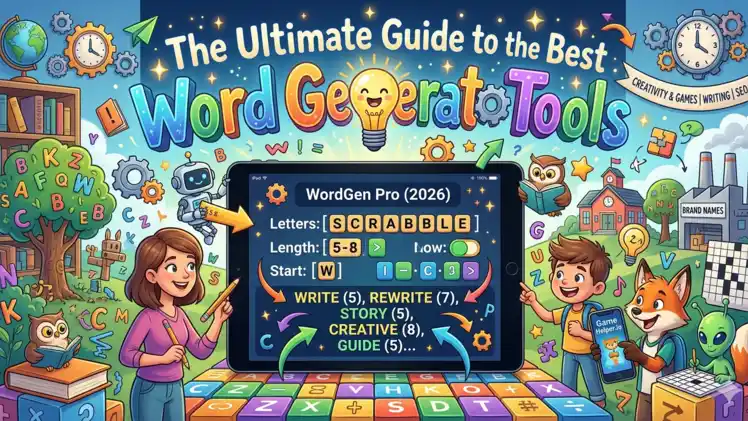
Have you ever felt stuck while playing a game or writing? Maybe you have a pile of letters but cannot see a single word. Or perhaps you need a cool name for a new brand. This is where a word generator comes to the rescue. A word generator is a smart tool that creates or finds words for you.
These tools are not just for fun. They help teachers, writers, and computer experts every day. In this guide, you will learn how a word generator works. We will look at its history and why it is so important today. You will also find a list of the best tools to use in 2026. By the end, you will know how to pick the right one for your needs.
What is a Word Generator?
A word generator is a digital tool that makes lists of words. It can find words based on specific rules. For example, you might ask for words that start with “S” or words that have five letters.
These tools are very helpful for solving puzzles. They are also great for learning new parts of a language. Some people use them to find “spark” ideas for stories. Basically, it is a brain-booster for your vocabulary.
History & Evolution of Word Generators
Before computers, people used books to find words. They used rhyming dictionaries or thesauruses. In the 1980s, basic word lists appeared on early computers.
Key Milestones
-
1990s: Simple “anagram solvers” helped Scrabble players.
-
2000s: Online websites began to offer random word lists.
-
2010s: Mobile apps made it easy to use a word generator on the go.
-
2026: Modern tools use AI to understand the meaning behind words.
Why is a Word Generator Important?
A word generator is vital for many reasons. In the gaming world, it keeps play fair and fast. In marketing, it helps create catchy names for products.
Studies show that using word tools can expand a person’s vocabulary by 20% over a year. Experts say these tools help “unblock” the creative mind. They take the hard work out of searching so you can focus on the fun part.
How Does a Word Generator Work?
Most of these tools use a large database. This is like a massive digital dictionary. When you type in letters, the tool runs a quick search.
Real-Life Example
Imagine you are playing a game with the letters “A, T, R.” The word generator looks at its list. It quickly finds “ART,” “RAT,” and “TAR.” It does this in less than a second. Advanced tools can even filter by “nouns only” or “positive words.”
Key Benefits of Word Generator Tools
-
Saves Time: You don’t have to flip through pages.
-
Boosts Learning: You discover words you never knew before.
-
Fair Play: It helps settle ties in board games.
-
Creativity: It gives you a starting point for writing.
-
Brain Exercise: It keeps your mind sharp and active.
Challenges & Common Misconceptions
Some think using a word generator is “cheating.” While this can be true in competitive games, it is a great teaching tool. Another myth is that they only give you “weird” words.
The Solution: Use filters! Good tools let you choose common words or rare words. This makes the results more useful for your specific task.
Word Generators in 2026: Latest Trends
This year, the word generator has changed a lot. AI is the big star.
-
Context Awareness: Tools now suggest words based on your topic.
-
Voice Search: You can say “Give me five-letter words” and get a list back.
-
Visual Words: Some generators now show images with the words.
How to Use a Word Generator (Step-by-Step)
-
Pick Your Tool: Choose a website or app.
-
Enter Your Rules: Type in your letters or choose a category.
-
Set Filters: Choose the length or the starting letter.
-
Click Generate: Hit the button to see your list.
-
Save Results: Pick the words you like and use them!
Best Tools & Resources
-
WordGen Pro: Best for professional writers.
-
GameHelper.io: Great for Scrabble and crossword fans.
-
NameSmith: A word generator focused on brand names.
-
DailyVocab: Helps students learn one new word each day.
Case Studies & Success Stories
Sarah, a Blogger: Sarah used a word generator to find a name for her travel blog. She found the word “WanderRoot,” which she loves.
TechCorp: This company used a random tool to name their new software. It helped them find a name that was short and easy to say in every language.
Expert Tips & Best Practices
-
Mix it Up: Don’t rely on just one tool.
-
Check Meanings: Always look up what a new word means.
-
Use for Drafts: Use generated words for your first draft, then refine them.
-
Keep it Simple: Sometimes the simplest word is the best choice.
Frequently Asked Questions
Is a word generator considered cheating in games?
It depends on the context. In a friendly home game of Scrabble, it can be a great way to learn. However, in official tournaments, using a word generators is usually not allowed. Always check the rules with your friends or the event leaders first.
Can a word generator help me with my homework?
Yes! These tools are excellent for learning new vocabulary or finding rhymes for a poem. Many students use them to find synonyms (words that mean the same thing) to make their essays more interesting.
Do word generators work in other languages?
Many modern tools support multiple languages like Spanish, French, and German. When you use a word generator in 2026, you can often toggle between different dictionaries to help you learn a new language.
Is my data safe when I use these websites?
Most reputable word generator tools do not ask for personal information. They are safe to use because you just type in letters and get results. However, you should still avoid clicking on random pop-up ads on free sites.
How does a word generator help with SEO?
Writers use these tools to find related keywords. If you are stuck on a topic, a word generator can provide a list of terms people might search for. This helps your article show up higher in search engine results.
Conclusion
A word generator is a powerful ally for anyone who works with language. It saves time, sparks joy, and helps you learn. Whether you are a student, a gamer, or a pro writer, these tools make life easier. Use a word generators today and see how much faster you can work and play!
💬 Leave a Comment
Leave a Comment